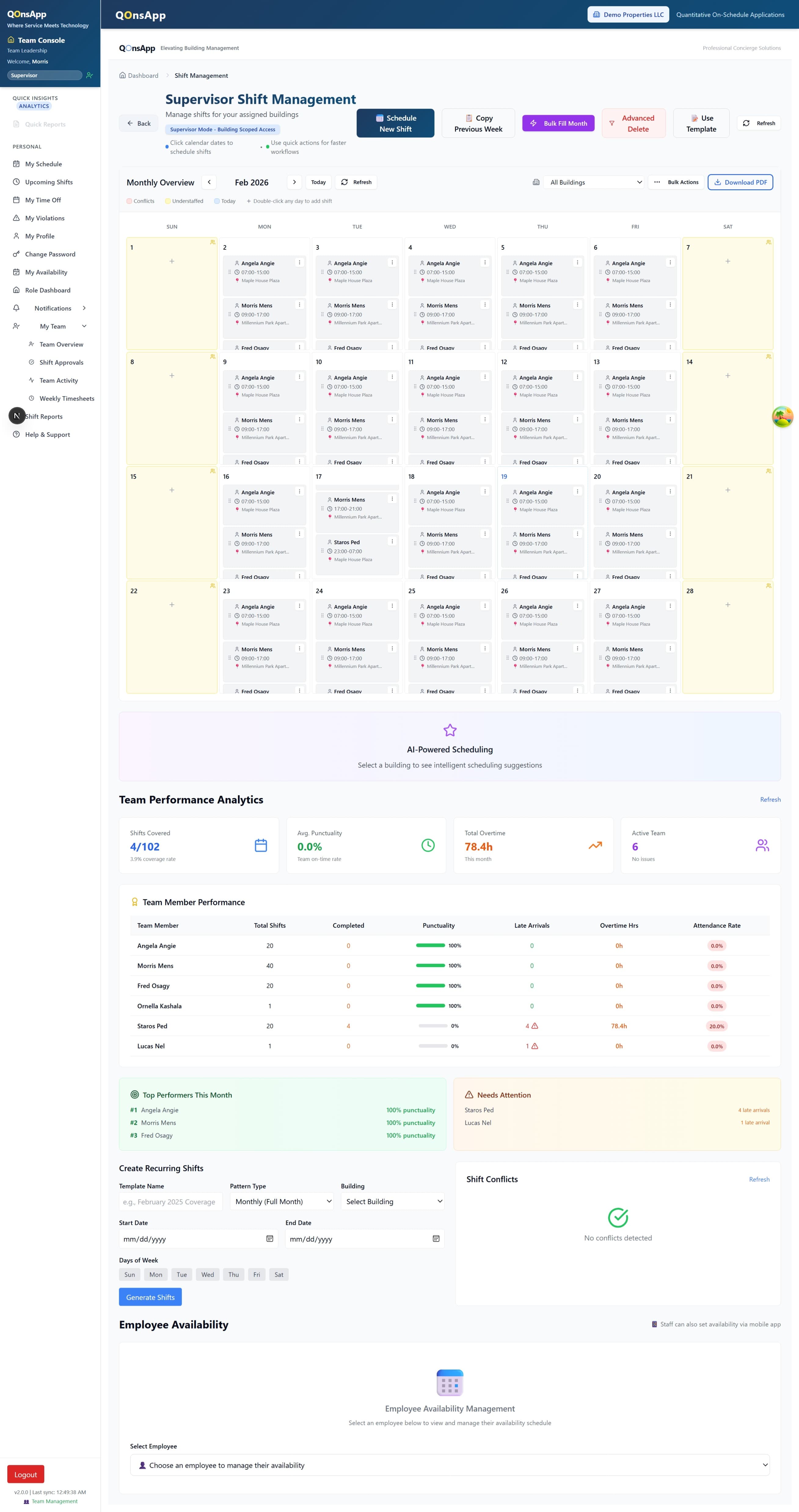
Workforce scheduling in property management has always been reactive. A concierge calls in sick at 6 AM, and the operations manager starts texting through a contact list. A new building opens, and someone copies last quarter's rota into a fresh spreadsheet. According to McKinsey, property companies that adopt workforce automation reduce administrative overhead by 20-30%. That gap between manual processes and modern tooling is exactly where AI scheduling fits.
AI scheduling software for property management doesn't replace managers. It removes the low-value, repetitive decisions that eat into their day: who's available, who's already approaching overtime, which building needs an extra pair of hands on Friday evening. QonsApp runs this on Claude, Anthropic's large language model (Sonnet 4.6), which drafts a complete monthly roster in one pass and explains its reasoning, freeing managers to focus on resident experience and team development.
So what does that look like in practice? Below, we'll walk through the core capabilities, the step-by-step workflow, and the measurable outcomes property companies can expect when they move from reactive rostering to AI-driven scheduling.
What Makes AI Scheduling Different?
Traditional scheduling tools digitise the spreadsheet. AI scheduling replaces the guesswork behind it. Here are the six capabilities that matter most for property operations teams.
Claude-Generated Monthly Rosters
QonsApp uses Claude (Anthropic's Sonnet 4.6) to generate a full month of shifts in one pass. The model weighs each staff member's availability, skills, certifications, maximum weekly hours, and overtime willingness, then returns a complete roster with a plain-language summary of its decisions and any coverage gaps. Managers review and approve rather than build from a blank grid.
Real-Time Gap Detection
When a team member calls in sick or a shift goes unclaimed, the system identifies the gap within seconds. It cross-references availability, certifications, and proximity to recommend the best replacement, then sends an instant notification to eligible staff.
Multi-Property Staff Sharing
Properties in the same portfolio often have overlapping quiet hours. The scheduler recognises these patterns and suggests cross-site assignments that keep each building covered without requiring additional hires. Managers approve or adjust with a single click.
Overtime and Cost Controls
Built-in labour-cost guardrails flag schedules that would push a worker past overtime thresholds before the roster is published. Managers see a projected cost breakdown per property and can redistribute hours to stay within budget.
Automated Shift Notifications
Staff receive shift confirmations, reminders, and change alerts through push notifications, SMS, or email. Managers no longer chase responses in group chats. Every acceptance, swap, and decline is logged for audit purposes.
Compliance-Aware Rostering
The engine respects minimum rest periods, maximum consecutive days, and certification requirements defined in your company policies. Schedules that violate a rule are blocked before publication, reducing the risk of regulatory penalties.
Why Do Property Companies Struggle with Scheduling?
Property management sits in an awkward middle ground. Portfolios are large enough to make manual scheduling painful, but margins are tight enough that enterprise workforce platforms feel over-engineered and overpriced. A Bureau of Labor Statistics report notes that turnover among building maintenance and cleaning staff exceeds 30% annually, which means schedules break constantly as new hires ramp up and experienced staff rotate out.
On top of turnover, property teams contend with variable demand. Resident move-ins cluster around the first and fifteenth of each month. Holiday weekends require skeleton crews. Severe weather events spike maintenance requests overnight. A static weekly template can't accommodate that volatility, and managers end up spending hours each week patching holes manually.
AI scheduling addresses these pain points by treating the roster as a living system rather than a static document. When conditions change, the schedule adapts. When a new hire joins, their availability feeds into the model immediately. The result is fewer gaps, less overtime, and more consistent coverage across every building in the portfolio. For a broader view of operational tooling, see how our multi-property dashboard ties scheduling data into a single operations view.
How Does AI Scheduling Work?
Three steps take you from scattered spreadsheets to a fully automated, cost-optimised schedule.
Connect Your Properties
Import your building portfolio, staff roster, and existing shift templates. QonsApp maps each property's operating hours, required roles, and compliance rules into a single scheduling workspace. Most teams finish onboarding within a day.
Let the Engine Build Rosters
Once your data is in place, the scheduling engine generates weekly or monthly rosters that balance coverage, cost, and staff preferences. It prioritises fair distribution of premium shifts and respects time-off requests automatically.
Review, Approve, and Monitor
Managers review the draft schedule in a calendar view, make any final tweaks, and publish. From that point, the system monitors attendance in real time and handles last-minute swaps without manager intervention.
What Results Can You Expect?
The numbers depend on portfolio size and current scheduling maturity, but property companies that switch from manual processes to algorithm-driven rostering consistently report three improvements: lower overtime spend, faster shift coverage, and higher staff retention. Industry benchmarks from SHRM suggest that predictable scheduling alone can reduce frontline turnover by up to 15%.
Overtime reduction is often the most immediate win. When the engine distributes hours evenly and flags threshold breaches before a roster is published, managers avoid the costly surprise of a payroll spike. Industry studies of predictable, evenly distributed scheduling point to overtime savings in this range, which is the mechanism QonsApp's overtime guardrails are built to capture.
Shift fill speed is the second area of impact. Instead of a manager spending 30-45 minutes calling through a list, the system identifies and notifies eligible replacements within seconds. Acceptance rates climb because staff receive opportunities matched to their stated preferences and availability. The scheduling data also flows directly into payroll integration, eliminating the double-entry that plagues most property operations teams.
Finally, better scheduling drives better retention. Staff who receive fair, predictable rosters with adequate rest periods are less likely to leave. For companies managing dozens of properties, even a modest retention improvement translates to significant savings on recruitment and training. Pair scheduling insights with executive analytics to track these trends at the portfolio level.